
What Spiritual Integration Really Means | Nervous System Stability During Spiritual Awakening
Mar 13, 2026There is a quiet shift that happens after awareness expands.
At first, awakening feels like clarity. You understand your emotional patterns. You can see where you’ve overextended yourself. You recognize relationship dynamics with new precision. You notice when your intuition nudges you.
But then something deeper begins.
You start asking not just, “What is happening?” but “How do I live well with what I now understand?” That question is not rooted in confusion. It’s rooted in emotional maturity.
Spiritual integration is the stage of growth where awareness becomes embodied stability. It is where perception settles into the nervous system. It is where insight becomes lived confidence rather than constant analysis.
For many women, this is the most important part of spiritual awakening — because this is where growth becomes sustainable.
What Is Spiritual Integration? A Grounded Explanation
Spiritual integration is the process of allowing increased awareness to reorganize your nervous system, your relationships, your routines, and your sense of identity.
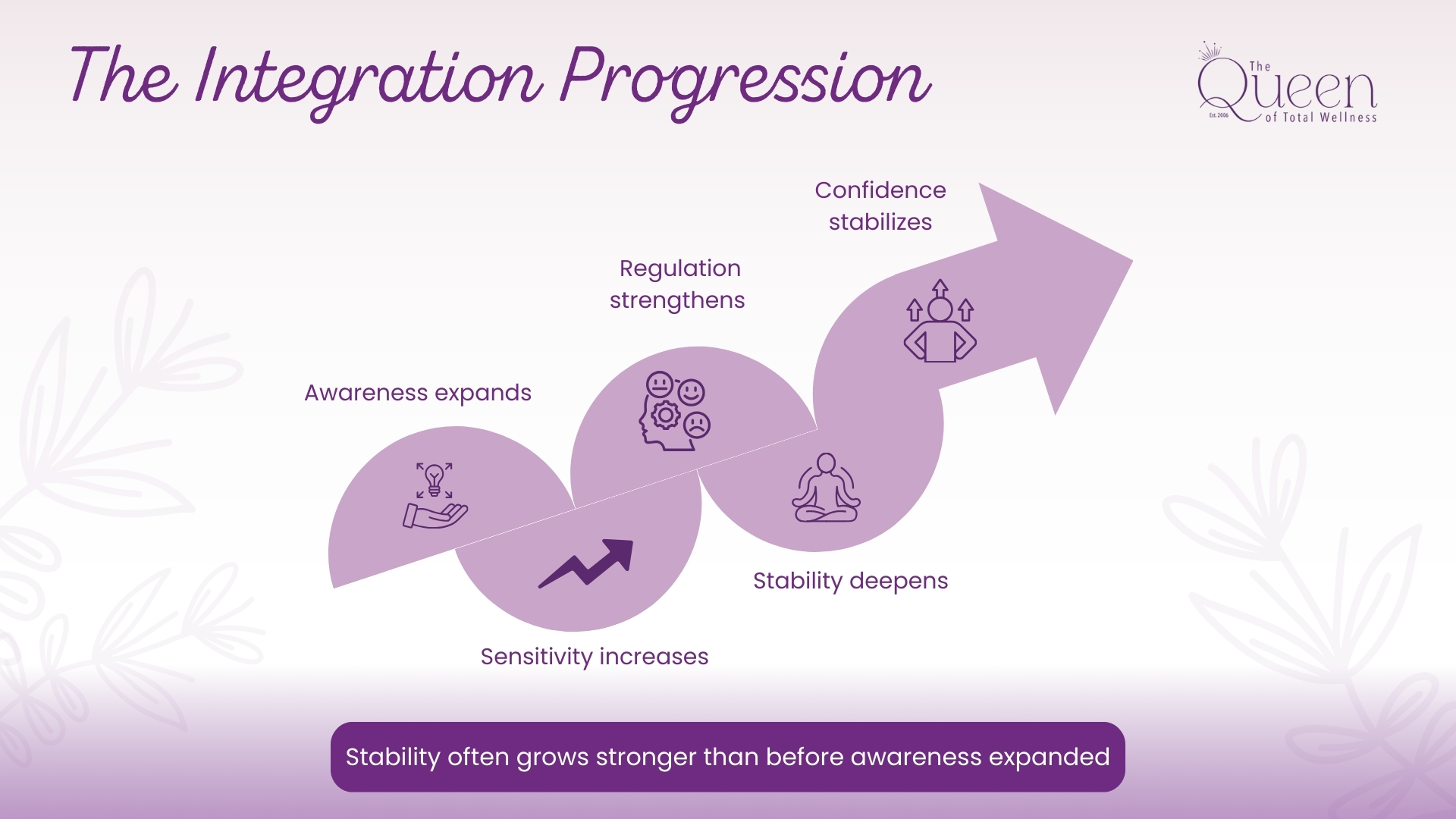
Awakening expands perception. Integration builds capacity. Capacity is your ability to stay steady while holding more awareness.
For example, awareness might help you recognize that you’ve been overfunctioning in relationships. Integration is what allows you to change that pattern without collapsing into guilt or anxiety. Awareness might show you that you’ve outgrown certain environments. Integration supports you in adjusting gradually rather than reactively.
Integration involves nervous system regulation during spiritual awakening because the body must feel safe in order for change to feel empowering rather than threatening. When the nervous system is regulated, emotional stability during personal growth strengthens naturally. And stability builds confidence.
Why Increased Sensitivity Is Often a Sign of Development
One of the most common concerns women express during this phase is increased emotional sensitivity. They often ask themselves questions like:
“Why am I more emotional after spiritual awakening?”
“Why do I feel overwhelmed during personal growth?”
“Is this anxiety or something else?”
In many cases, what they are experiencing is not deterioration — it is refinement.
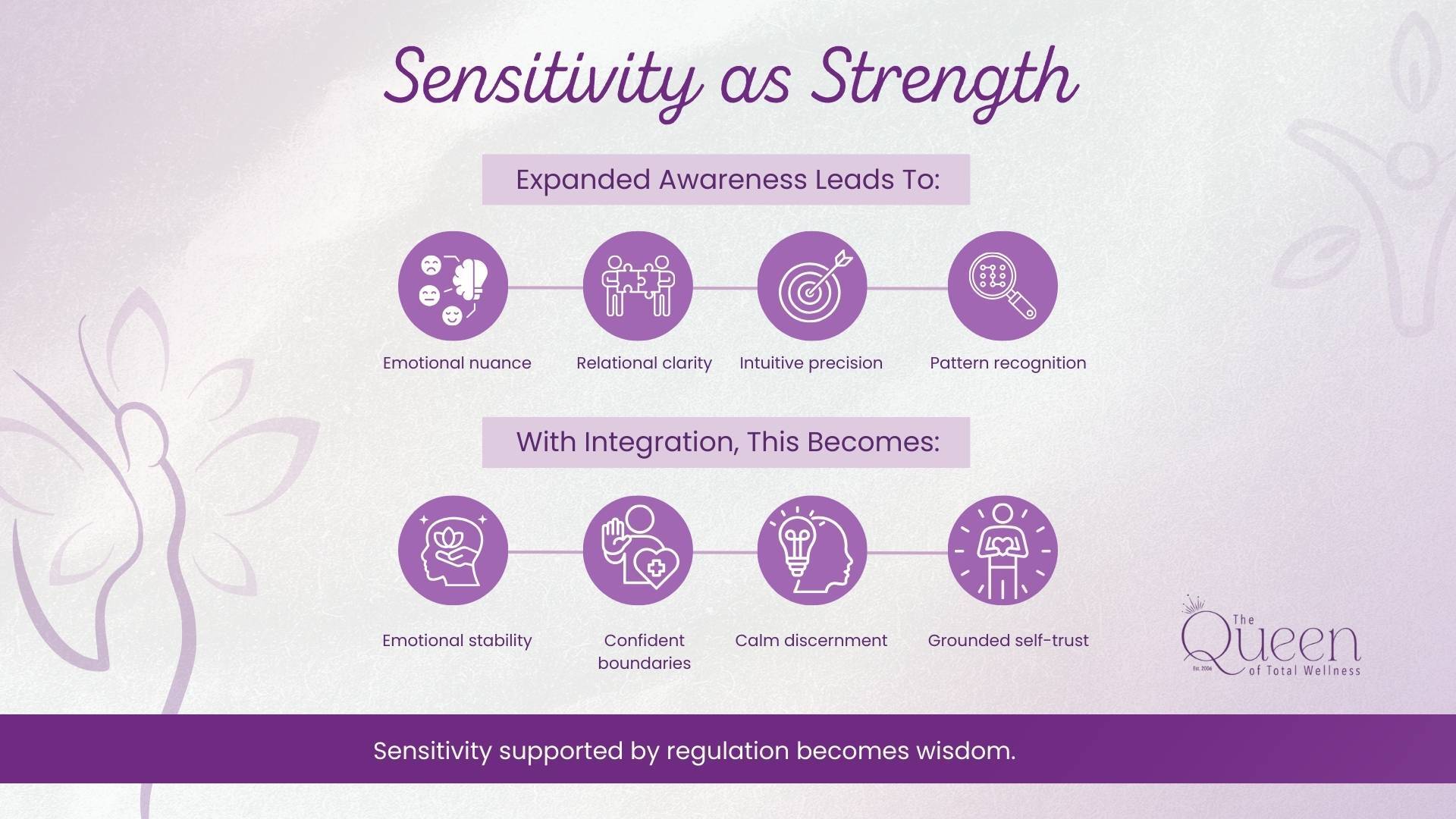
As awareness expands, perception sharpens. You begin to notice subtleties you once ignored. Tone shifts. Body language. Energetic tension in a room. Internal discomfort you previously overrode.
This refinement is a sign of intelligence increasing — emotional and intuitive intelligence.
However, refinement without regulation can feel intense. The nervous system has to adapt to increased sensory and emotional input. Without grounding after spiritual awakening, sensitivity can temporarily feel amplified.
Integration helps your body recalibrate so that sensitivity becomes discernment rather than overwhelm. Discernment is strength.
The Nervous System’s Role in Spiritual Awakening
Many discussions about spiritual growth focus on mindset, manifestation, or identity — but fewer explain the physiological layer.
Your nervous system is constantly scanning for safety. It organizes around familiarity. When awareness expands, familiar patterns begin to shift. Even positive shifts signal change.
The body responds to change carefully. This is why you may feel temporarily unsettled during spiritual awakening integration. Not because growth is unsafe — but because the body is learning a new baseline.
Nervous system regulation during spiritual awakening might include:
- Maintaining predictable sleep rhythms
- Protecting downtime
- Limiting overstimulation
- Practicing calm boundary-setting
- Reducing excessive information intake
These are not small habits. They are stabilizing signals to the body.
When the body feels safe, emotional stability during personal growth strengthens. Decision-making becomes clearer. Boundaries feel less threatening. Confidence becomes embodied rather than performative.
What Spiritual Integration Looks Like in Real Relationships
Integration is rarely dramatic. It does not usually look like sudden endings or public declarations.
Instead, it looks like subtle but consistent shifts.
You may respond differently in conversations. You may tolerate less passive aggression. You may speak more directly but more calmly. You may choose rest instead of overcommitment.
These shifts are not loud.
They are stable.
Spiritual integration allows you to evolve within your existing life structure rather than abandoning it impulsively. It supports sustainable growth.
In relationships, integration often means:
- Communicating needs without escalating
- Holding boundaries without overexplaining
- Allowing discomfort without collapsing
- Listening to intuition without dramatizing
This is maturity in motion.
Why Structured Growth Feels Calming
As someone whose background began in formal education, I have always believed that growth stabilizes when it is structured.
Curriculum matters. Sequencing matters. Repetition matters.
The nervous system responds well to predictability. When spiritual education is progressive and thoughtful, women often report feeling calmer — not more activated.
Integration thrives in organized learning environments because they reduce cognitive overload and emotional overstimulation.
Steady education supports:
- Nervous system regulation during spiritual awakening
- Emotional stability during personal growth
- Clear identity development
- Sustainable energetic alignment
When learning is paced, growth feels contained rather than chaotic. Containment creates safety. Safety creates stability.
Integration Is a Sign of Emotional Maturity
There is a cultural narrative that equates rapid change with courage.
But sustainable change reflects maturity.
Integration allows you to evolve without destabilizing your life. It allows you to grow without abandoning your responsibilities. It strengthens discernment rather than urgency.
As integration deepens, many women notice:
- Greater patience with themselves
- Less desire for dramatic transformation
- More interest in consistency
- Stronger internal authority
- Deeper self-trust
These are not small shifts. They are foundational.
A Gentle Encouragement
If awareness has expanded and your system is adjusting, you are not behind.
You are building capacity.
Spiritual integration is not the flashy part of awakening — but it is the steady part. It is the part that allows growth to last.
Continue learning in ways that feel grounding. Continue choosing environments that emphasize stability over stimulation. Continue honoring your nervous system’s pace.
Growth that is steady becomes strength. And strength that is embodied becomes confidence.
Frequently asked questions(FAQs)
What is spiritual integration in simple terms?
Spiritual integration is the process of stabilizing new awareness so it becomes embodied in your nervous system, daily life, and relationships.
Why do I feel more sensitive after spiritual awakening?
Increased awareness can heighten perception before nervous system regulation strengthens. With integration, sensitivity becomes grounded discernment.
How do I regulate my nervous system during spiritual awakening?
Consistent routines, reduced overstimulation, calm boundary practice, and paced learning often support nervous system regulation.
Is it normal to feel emotional during personal growth?
Yes. Emotional sensitivity often reflects recalibration as awareness expands.
How long does spiritual integration last?
Integration unfolds gradually. Stability increases as nervous system capacity strengthens over time.